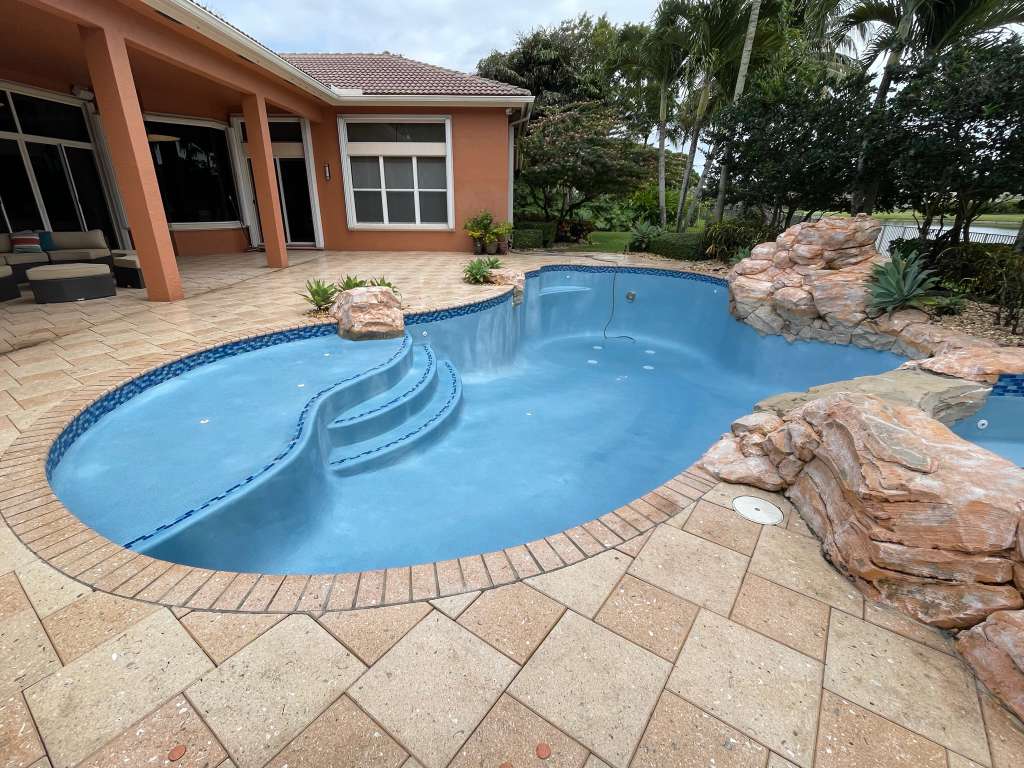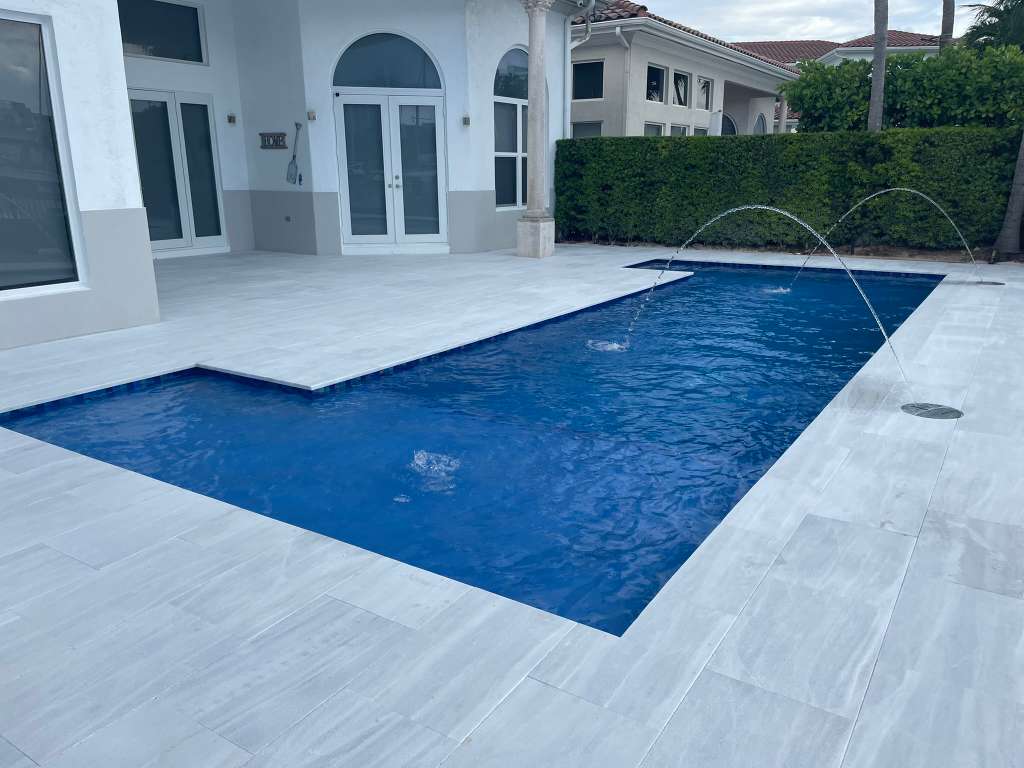
Pool resurfacing in Weston and Broward County is priced on two things above all: your pool's interior surface area, and the finish you choose — plaster costs least and lasts shortest, pebble costs most and lasts longest, quartz sits between them. Add tile, coping, decking or equipment and the project grows from there. Here's what actually moves the number, and how to get yours.
If you've searched "pool resurfacing near me" and gotten quotes that range from suspiciously cheap to shockingly high, you're not alone. Resurfacing is the most common pool renovation in South Florida — and one of the least transparent to shop for. Here's an honest breakdown of what resurfacing costs in Weston and Broward County in 2026, what actually drives the price, and how to budget without surprises.
We don't publish prices here, because a number with no pool attached to it helps nobody — and every quote we give depends on your pool's condition, size and access. For a real range on your own pool in about a minute, use the free cost estimator; for the actual number, the on-site visit is free.
How much does pool resurfacing cost in Broward County?
Resurfacing is priced by your pool's interior surface area (floor plus walls — not just the water's footprint), multiplied by what the finish costs per square foot. That's the whole formula. Where the three finishes sit against each other:
| Finish | Relative cost | Lifespan in Florida | Cost per year of service |
|---|---|---|---|
| White plaster | Lowest | 7–12 years | Highest |
| Quartz aggregate | Moderate premium | 10–15 years | Middle |
| Pebble | Highest — roughly double plaster | 15–20+ years | Often the lowest |
That last column is the one most people haven't considered. The cheapest finish to install is the most expensive to own, because you buy it more often.
A 15×30 ft pool with 5 ft average depth has roughly 900 sq ft of interior surface — more than most owners expect, because the walls count. Want your pool's number, and a real range to go with it? The cost estimator works it out from your dimensions, with no email and no phone number.
What drives the price of pool resurfacing?
Size and shape. Surface area is the multiplier behind everything. Deeper pools have more wall area than you'd guess — two pools with the same footprint can differ by hundreds of square feet of surface. Freeform shapes with tanning ledges and swim-outs add area too.
Finish choice. The biggest single decision, covered in detail below — a pebble finish can cost roughly double plaster, but also lasts roughly twice as long.
Condition and prep. A pool with delaminating plaster, hollow spots, or old repairs needs more chip-out and prep work. This is where honest quotes differ from lowball ones: proper prep is invisible in photos but determines whether your new finish lasts 15 years or fails in 3.
Add-ons bundled into the project. Resurfacing is the natural moment to renew everything else, because the pool is already drained and the crew is already mobilized:
- Waterline tile — priced per linear foot of perimeter, so it tracks your pool's shape more than its size. Glass mosaic costs more than ceramic.
- Coping — also per linear foot; the material (travertine, poured concrete, brick) drives the spread.
- New decking — per square foot, and the deck is usually far bigger than people estimate, which makes it the add-on most likely to surprise.
- Equipment upgrades (pump, heater, automation) — priced per unit, largely independent of pool size.
- Spa or water feature addition — the largest of the add-ons, and the one that varies most by design.
A full renovation — resurfacing plus new tile, coping and decking together — is naturally a multiple of resurfacing alone. What matters more than the headline number: bundling saves real money versus doing each piece in a separate year, because the drain-down, the mobilization and the permit happen once instead of three times. If you know you want the tile done eventually, doing it while the pool is already empty is the cheapest it will ever be.
Which finish should you choose — plaster, quartz, or pebble?
White plaster is the classic, most economical finish — smooth, bright, and the reason pool water "looks blue." Its trade-off is lifespan: in Florida's sun and chemistry, expect 7–12 years before staining and etching bring you back.
Quartz aggregate blends crushed quartz into the plaster for a harder, more stain-resistant surface with richer color options. It's the mid-range sweet spot most of our Weston clients choose: meaningfully longer life (10–15 years) for a moderate premium.
Pebble finishes embed small smooth stones for the most durable surface available — 15–20+ years, excellent resistance to chemistry swings, and the premium textured look you see in resort pools. It costs the most upfront and, amortized over its lifespan, often costs the least per year of service. Pebble also handles salt systems particularly well, which matters given how many Broward pools have converted to salt.
Still deciding? Ask us during your on-site estimate — we'll show you samples against your own deck and waterline, which settles it faster than any table can.
What should a pool resurfacing quote include?
When you compare quotes, make sure each one itemizes:
- Surface prep scope — chip-out extent or bonding treatment, and what happens if hollow spots are found
- The exact finish product and color — "quartz" spans a wide quality range; get the brand and product line in writing
- Waterline tile handling — reused, replaced, or priced as an option
- Startup chemistry service — new finishes need a specific 28-day startup; who does it, and is it included?
- Permit and inspection handling — resurfacing work in Broward County is permitted work
Our quotes are itemized exactly this way, and the number we quote is the number you pay. If comparing bids, the cheapest quote usually earns its price in skipped prep.
Do you actually need resurfacing — or just an acid wash?
Not every rough or stained pool needs a new finish. Surface stains on structurally sound plaster can often be renewed for far less with acid washing. But these signs point to genuine resurfacing:
- Rough, sandpaper texture that scrapes feet and snags swimsuits
- Widespread etching, mottling, or deep staining that acid washing won't lift
- Visible cracks, hollow "drummy" spots, or flaking plaster
- A finish 10+ years old that keeps drinking chemicals without holding balance
One caution: if your pool is also losing water, solve that first — resurfacing does not fix leaks, and new plaster over an unresolved leak is money down the drain. Our leak detection service pinpoints the problem without guesswork.
How do you get an exact resurfacing price?
Two steps, both free:
- Instant ballpark: enter your pool's dimensions and finish choice in our pool renovation cost estimator — no email or phone required, itemized results in seconds.
- Exact quote: request a free on-site estimate. We measure your actual surface area, assess the existing finish, and give you an itemized, transparent price — the quote you receive is the invoice you pay.
Blue Clair Pool has resurfaced and renovated pools across Weston, Davie, Cooper City, and all of Broward County since 2018, with a 5.0-star rating our customers gave us one honest project at a time.