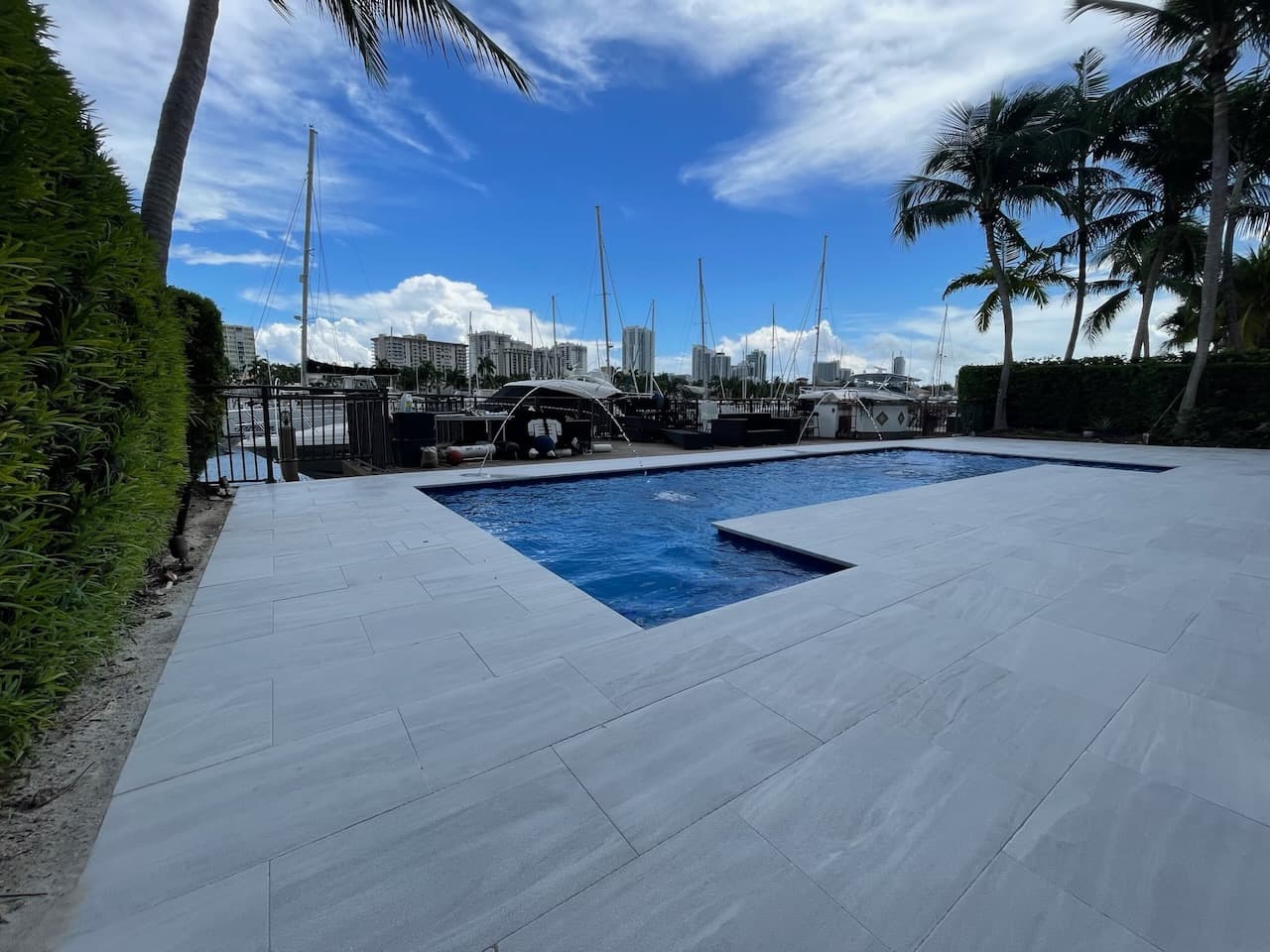
Pool Remodeling in Fort Lauderdale, FL
Resurfacing, tile, coping, decking and equipment upgrades for existing Fort Lauderdale pools — from Victoria Park and Rio Vista to Coral Ridge and the waterfront isles. Free on-site assessment, itemized estimate, no new construction upsell.
⭐ Trusted by hundreds of South Florida homeowners • 6+ years of experience
Remodeling Fort Lauderdale's Existing Pools
Blue Clair Pool remodels pools that are already in the ground. If your interior finish has gone rough underfoot, your waterline tile is coming loose, your coping is cracked, or your deck is stained and spalling, a remodel restores all of it without changing the footprint of your yard. Fort Lauderdale is a city of established pools, and almost everything we do here is renewal rather than construction.
What separates a Fort Lauderdale remodel from one a few miles inland is the coast. Salt-laden air off the beach and the Intracoastal reaches every exposed surface in an east-side backyard. It corrodes the metal in handrails, ladder anchors, light-niche rings and deck fixings; it feeds efflorescence and staining on stone coping and travertine; and it works alongside relentless sun and drifting water chemistry to etch a plaster finish. Underneath the yard there is a second factor most homeowners never think about until the pool has to be emptied: groundwater sits close to the surface across the eastern half of the city.
The housing stock matters too. Rio Vista, Victoria Park, Colee Hammock, Coral Ridge, Sailboat Bend and the Lauderdale Isles were largely built out decades before Broward's western suburbs, and their pools are older in step with the houses. That is why so much of our remodeling work in this city is about components that have simply reached the end of their service life: original plaster on its second or third decade, a waterline tile pattern nobody makes anymore, cantilevered concrete coping cracked along the bond beam, and an equipment pad designed around a single-speed pump.
One thing we do not do is build new pools. Everything on this page is remodeling, renovation and repair of an existing pool — which is also the point: a shorter timeline, a smaller budget, and no reshaping of your property. Every project starts with a free on-site visit, because looking at the shell, the tile line, the deck and the equipment pad in person is the only honest way to price the work.
What's Included
Interior Resurfacing
White plaster, colored plaster, quartz or pebble finishes to replace a worn, etched or stained surface
Waterline Tile & Coping
New waterline tile and coping — the details that date a pool fastest and fail first near salt air
Deck Restoration
Repair or replace cracked, spalled and slippery decking around the pool and along the seawall side
Equipment Modernization
Variable-speed pumps, modern filtration, heaters, salt systems and automation on a rebuilt pad
Lighting & Features
LED lighting, sheer descents, bubblers and spa additions folded into the same drained-pool window
Permits & Inspections
We pull the permits the scope requires and coordinate the inspections as part of the schedule
What Coastal Exposure Does to a Pool Surface
Fort Lauderdale pools do not fail the way inland pools fail. Four patterns show up again and again once you are east of the highway.
Salt air attacks the metal first
Handrails, ladder anchors, light-niche rings, deck anchors and equipment fasteners corrode faster in a backyard near the beach or the Intracoastal than they do inland. Rust from a failing anchor bleeds a brown stain down the plaster and into the coping, and re-installing corroded hardware onto a brand-new finish is how a remodel starts aging on day one. We replace it rather than reuse it.
Etching and scaling on the interior finish
A plaster, quartz or pebble finish is a cementitious surface, and water that drifts out of balance either dissolves it (etching, which leaves the rough, sandpaper feel) or deposits calcium on it (scaling, the chalky grey line at the waterline). Year-round swimming, heavy evaporation and salt chlorine generators all make Fort Lauderdale water chemistry move faster than a pool up north, so the finish choice and the start-up plan both matter more here.
Efflorescence on coping and stone deck
Moisture travels through masonry and leaves mineral deposits behind — the white bloom you see on travertine and marble decks and along the underside of coping. It is a drainage and setting-bed problem as much as a cleaning problem, which is why we address the bedding, the joints and the sealing during a remodel instead of handing you a scrub brush afterwards.
Wind-driven debris and organic staining
Coastal landscaping — sea grape, ficus, palm — sheds constantly, and the sea breeze keeps it moving across the water. Tannins from that debris sink into a finish that has lost its density, which is why stains that once brushed out eventually stop coming out at all. That is usually the point where a pool has crossed from cleanable to due for resurfacing.
Draining a Pool East of the Intracoastal
Every resurfacing job begins by emptying the pool, and in coastal Fort Lauderdale that is the step that deserves the most respect. Groundwater sits close to the surface across the eastern half of the city, and it rises and falls with rainfall and with the tide. While the pool is full, the water inside balances the pressure of the groundwater outside the shell. Empty it at the wrong moment and that pressure has nothing pushing back against it.
The consequences range from a shell that lifts or cracks to a fiberglass or vinyl pool that floats out of the ground — the kind of damage that turns a routine resurfacing into a structural repair. The mitigations are ordinary but not optional: confirm the hydrostatic relief valve in the main drain actually functions, dewater the surrounding ground when conditions call for it, keep the pool empty for the shortest window the work allows, and schedule around heavy rain and seasonal high tides rather than straight through them.
This is also the practical argument for bundling scope. With the pool already drained, adding pool tile, coping, and decking work costs almost no extra empty time. Splitting it into two projects means draining the pool twice, and every drain in this part of the county carries the same considerations.
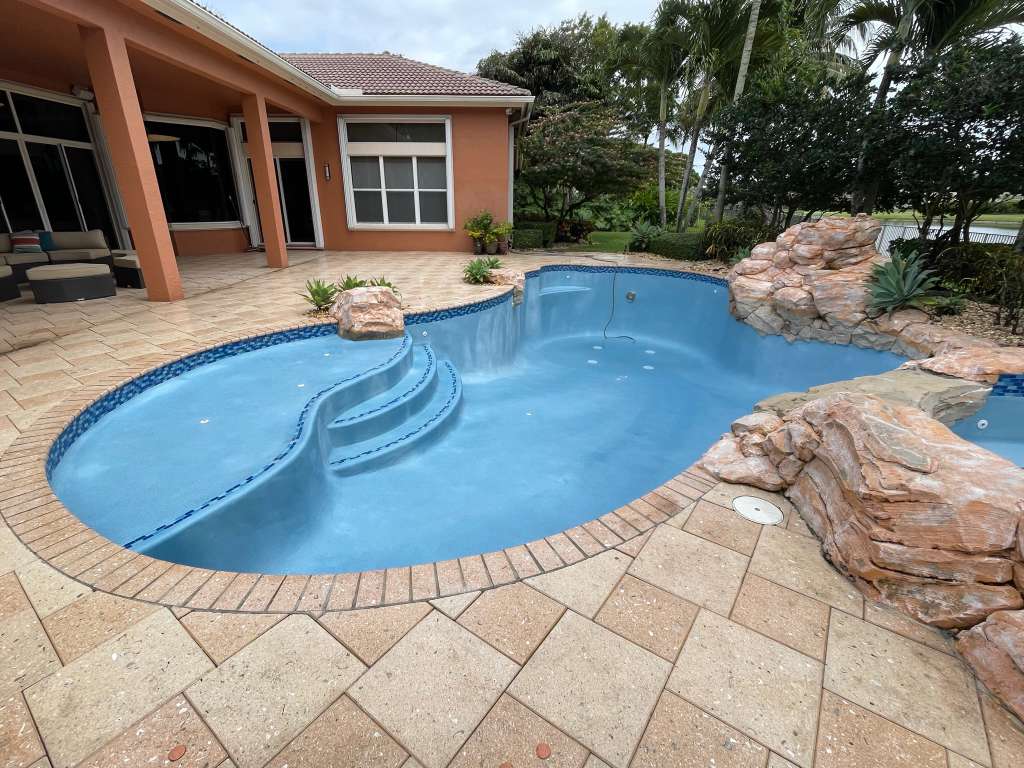
Older Pools in Fort Lauderdale's Established Neighborhoods
A remodel in Rio Vista or Coral Ridge is a different conversation from a remodel in a twenty-year-old subdivision. Here is what we typically find when we assess an older east-side pool.
Interior finish past its service life
Plaster typically gives 8-10 years and aggregate finishes 10-15 in this climate. Plenty of east-side pools are well beyond both.
Waterline tile that no longer exists
Small-format tile from the 1970s and 80s cannot be matched, so a partial repair reads as a patch. Replacing the full band is usually the better result.
Cracked or lifting coping
Cantilevered concrete and older brick coping crack along the bond beam and lift as the deck settles, which lets water behind the tile line.
Spalled, dated decking
Broom-finish concrete and Kool Deck coatings chalk, crack and get slippery. A remodel is the natural moment to move to pavers or travertine.
Single-speed pumps and undersized filters
Older pads were built around equipment that costs far more to run than a modern variable-speed pump on the same plumbing.
Original suction fittings and lighting
With the plumbing already open, upgrading to modern anti-entrapment drain covers and LED lighting is worth doing while access is free.
None of that means the pool is a problem. It means the pool is old enough to be worth renewing properly instead of patching, and that a single coordinated remodel almost always costs less than three separate visits spread over five years.
Waterfront and Canal-Lot Access
A large share of Fort Lauderdale pools sit on canal lots and finger isles where the side yard between the house and the property line is narrow, and the deck runs almost to a seawall. That geometry shapes the whole job. How does chip-out debris get carried out? Where do pallets of coping and deck material get staged without blocking a neighbor? Can a truck reach the shell, or does the material move by hand? What protects the seawall cap, the dock and the landscaping while heavy demolition happens a few feet away?
We answer those questions on the estimate visit, not on the first morning of demolition. It is also why two pools of identical size can carry different prices — access is a real cost, and pretending otherwise is how a quote turns into a change order.
The same walk-through covers the parts of your yard that are not the pool: irrigation lines under the deck, screen enclosure footings, and the drainage path from the deck toward the water, which matters more here than almost anywhere inland.
What a Fort Lauderdale Pool Remodel Includes
Build the scope from the surface outward. Most projects here are some combination of these four.
The interior finish
This is where nearly every remodel starts. If the surface is rough, chalky, blotchy or showing bare patches, it needs renewing — and a failing finish is not only cosmetic, because a deteriorating surface keeps pulling your chemistry out of balance and eventually lets water reach the shell. See the full detail on pool resurfacing and replastering, including how white plaster, quartz and pebble compare.
Tile, coping and the deck
The waterline band and the coping are what a guest actually looks at, and they are also the joint where water gets behind the structure when they fail. Deck material sets the whole backyard. Our pool tile, coping, and decking page covers the material options and how they hold up in this climate.
The equipment pad
Coastal pads corrode, and old single-speed equipment is expensive to run. A remodel is the cheapest moment to modernize because the plumbing is already open — see pool equipment upgrades for what that involves.
Features worth adding while it is open
LED lighting, bubblers, sheer descents and a spa are all far easier to add during a remodel than as a standalone project. If you have been considering a spa or water feature, this is the window. You can also browse all pool renovation services we offer across Broward County.
Permits and Inspections
Pool remodeling in Broward County is permitted work. Structural repair to the shell, new decking, electrical or gas changes at the equipment pad, and any alteration to the pool barrier go through plan review and staged inspections rather than straight to the crew. Permit review takes time, and that time belongs in the schedule from the beginning — a project that ignores it does not move faster, it just surprises you later.
We pull the permits the scope requires and coordinate the inspections as part of the job. If the remodel changes your deck or your pool barrier, expect the review to look at the barrier as well, and expect us to tell you about that before you sign rather than after demolition has started.
Be cautious of any contractor who offers to skip the permit to save you money. Unpermitted pool work follows the property, and it surfaces at the least convenient possible moment: when the house is being sold or insured.
What Pool Remodeling Costs in Fort Lauderdale
These are the South Florida ballpark ranges behind our online estimator — planning figures, not a quote. Your actual price depends on your pool, your finish, your site access and the condition of what is already there.
White plaster resurfacing
$5-$7 per sq ft
Per square foot of interior surface — floor plus walls, not the footprint of the yard.
Quartz resurfacing
$7-$10 per sq ft
Smoother than pebble, harder-wearing than plain plaster, with richer color options.
Pebble resurfacing
$10-$14 per sq ft
The most durable option and the one we most often suggest for salt systems near the coast.
Waterline tile
$25-$45 per linear ft
Priced along the pool perimeter; glass mosaic sits at the upper end of the range.
New coping
$30-$55 per linear ft
Also priced along the perimeter. Almost always done together with the tile band.
New decking
$10-$18 per sq ft
Deck area typically runs a little larger than the pool footprint itself.
Equipment upgrade
$1,800-$5,500
Pump, heater, filtration or automation, depending on what the pad actually needs.
Spa or water feature
$6,000-$18,000
Added during the remodel while the pool is already open and the deck is already up.
Want a ballpark for your own pool before you call? Put your dimensions into the pool cost estimator. It is an estimate, not a quote — the real number comes from a free on-site visit and arrives as an itemized written estimate.
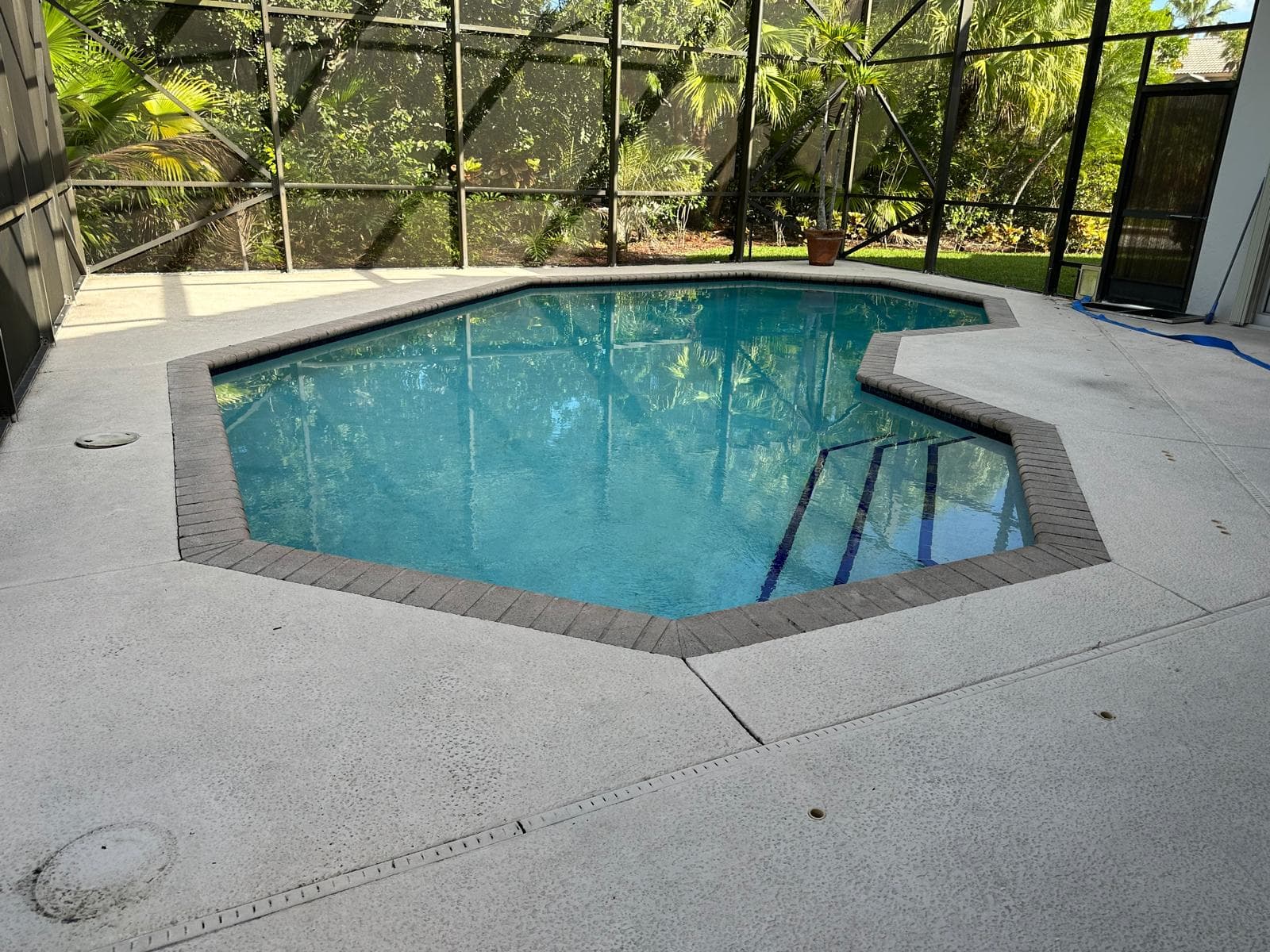
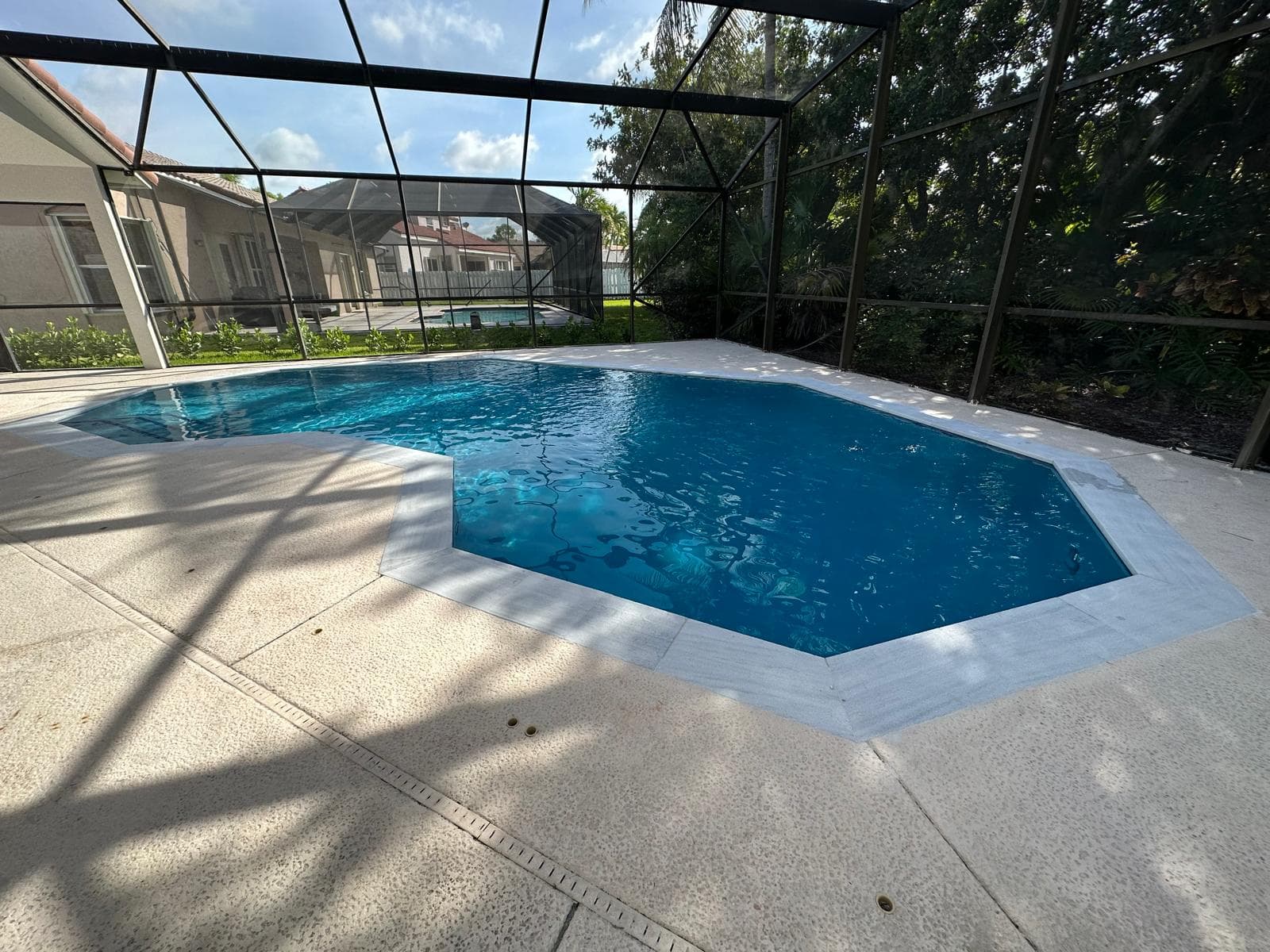
Before and After a Blue Clair Remodel
The same pool, before and after new coping and a fresh interior finish
How a Remodel Runs, Step by Step
One accountable team from the first visit to the final walkthrough.
- 1
Free on-site assessment
We look at the shell, the tile line, the coping, the deck and the equipment pad, and we walk the access route from the street to the pool — which on a canal lot is a real constraint, not a formality.
- 2
Itemized written estimate
You get the scope broken out line by line, so you can see what resurfacing costs versus tile, coping, decking or equipment, and decide what to include now and what to defer.
- 3
Permits and scheduling
We pull the permits the scope requires and build the review and inspection timeline into the schedule rather than discovering it mid-project.
- 4
Controlled draining
We confirm the hydrostatic relief valve is working, dewater the surrounding ground if conditions call for it, and time the drain around rain and seasonal high tides.
- 5
Demolition and surface prep
Failing plaster and hollow spots are chipped out, old tile and coping come off, cracks are repaired and a bond coat goes on so the new finish stays put.
- 6
Tile, coping, deck and equipment
Everything that benefits from an empty pool happens in this window — new waterline tile, coping, deck work, plumbing changes and equipment replacement.
- 7
New finish, refill and start-up
We apply your chosen finish, refill immediately, and run the start-up chemistry. Plaster and aggregate finishes need roughly four weeks of daily brushing and careful balancing to cure hard and evenly — we leave you the schedule for it.
Keeping a New Finish Looking New
A remodel is only half the story. The first month of water chemistry does more to determine how long a new plaster, quartz or pebble finish lasts than almost anything else, and after that it comes down to consistency — which is harder in a coastal backyard where salt spray, evaporation and constant organic debris keep pushing the water around.
We are the same company either way, so the crew that resurfaced your pool can keep it balanced afterwards. See weekly pool maintenance in Fort Lauderdale for what that service covers.
Pool Remodeling Questions
Common questions from Fort Lauderdale pool owners
Which parts of Fort Lauderdale do you remodel pools in?
How long does a pool remodel take in Fort Lauderdale?
Is it risky to drain a pool this close to the Intracoastal?
Does coastal salt air change which finish I should choose?
Do I need a permit to resurface or remodel my pool?
Can you replace the tile and coping while the pool is drained?
Do you build new pools?
What will my remodel actually cost?
Can you keep servicing the pool once the remodel is finished?
Pool Remodeling Across Fort Lauderdale
We remodel pools throughout the city — including Victoria Park, Rio Vista, Coral Ridge, Lauderdale Isles — and across the streets around Las Olas Boulevard, Fort Lauderdale Beach, Riverwalk. These are the ZIP codes we cover:
Related Pool Renovation Services
Explore more services we provide to keep your pool in perfect condition
Ready to Remodel Your Fort Lauderdale Pool?
Book a free on-site assessment. We will tell you honestly what your pool needs now, what can wait, and what it costs — in writing.