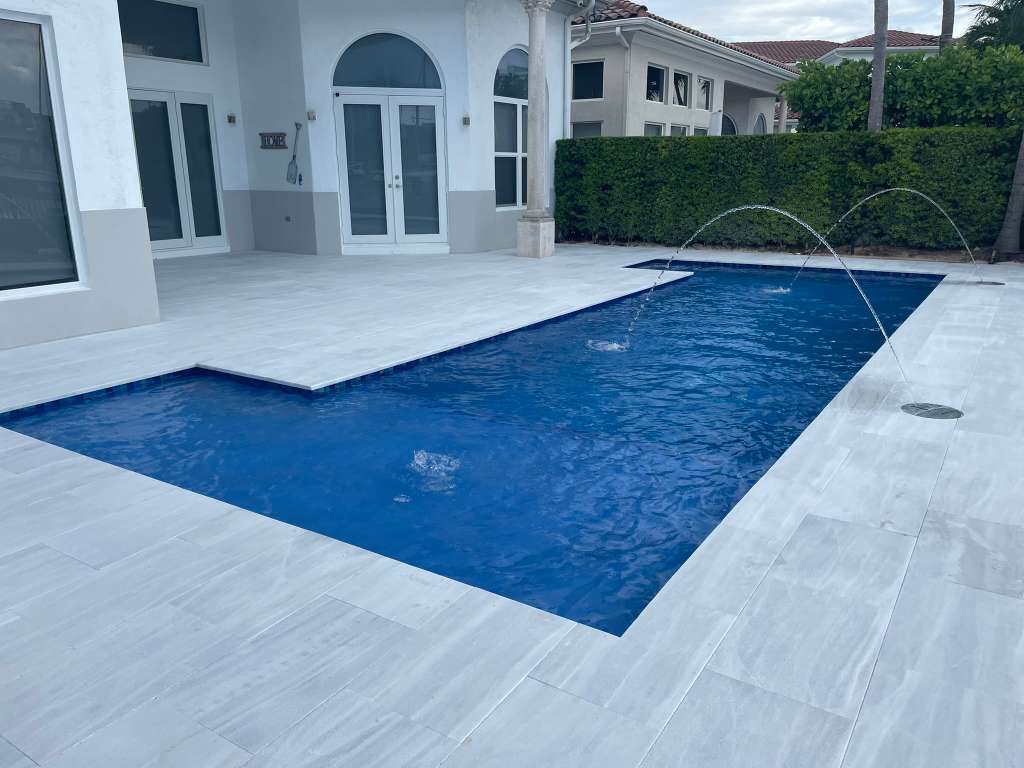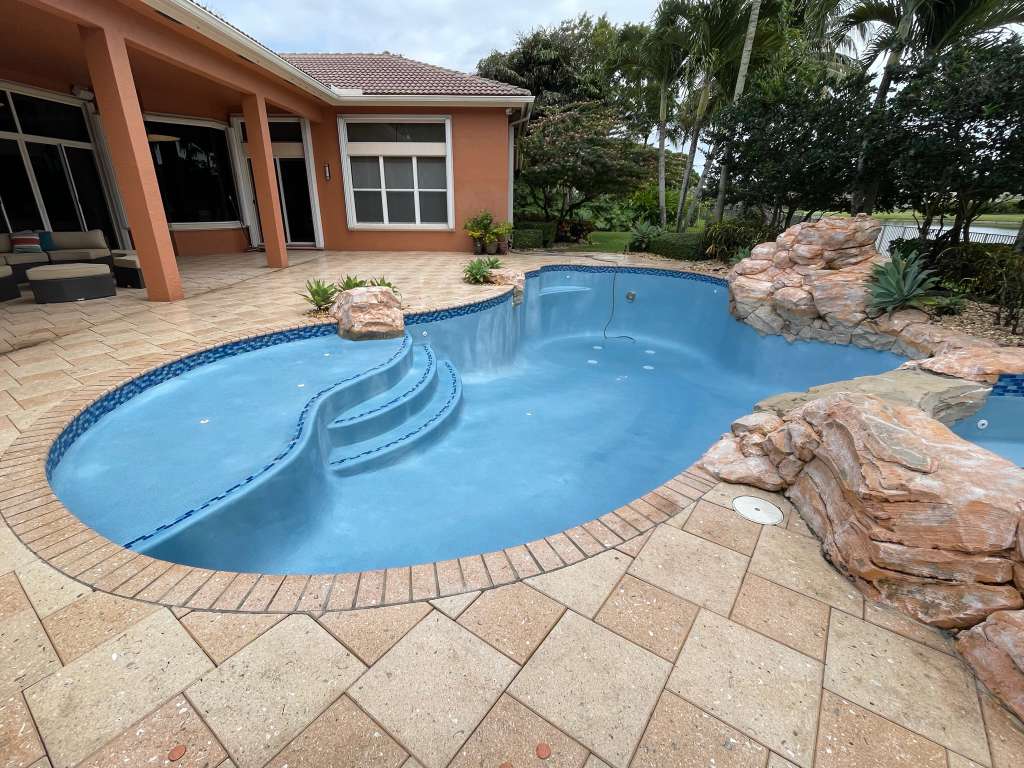
Pebble lasts longest — 15 to 20+ years — at the highest price. Quartz is the value sweet spot at 10 to 15 years. White plaster is the cheapest upfront but ages fastest in Florida, at 7 to 12 years. That is the whole verdict. Which one is right for your pool comes down to how long you plan to keep it, how the surface will feel underfoot, and the water color you want.
Choosing a finish is the single decision that most affects how your renovated pool looks, feels and lasts — and it's usually made in a few minutes at the end of a quote conversation. It deserves better than that. Here's an honest comparison of the three finishes we actually install in Broward County, including where each one disappoints people.
We don't publish per-square-foot prices here — a number with no pool attached to it helps nobody, and the total depends on your pool's surface area, condition and access. For a real range on your own pool in about a minute, use the free pool cost estimator, which has a finish selector built in. For the actual number, the on-site visit is free.
Which pool finish is best for a Florida pool?
For most Broward homeowners staying in the house more than about eight years, quartz is the best balance of cost and lifespan. Plaster makes sense on a tight budget or a short horizon; pebble makes sense when you want the longest service life and the richest water color, and you're willing to pay for it.
| White plaster | Quartz | Pebble | |
|---|---|---|---|
| Lifespan in Florida | 7–12 years | 10–15 years | 15–20+ years |
| Relative cost | Lowest | Middle | Highest |
| Feel underfoot | Smoothest | Slightly textured | Noticeably textured |
| Water color | Bright, pale blue | Richer blue, some depth | Deepest — blue to teal to near-black |
| Stain resistance | Lowest | Good | Best |
Those lifespans assume normal Florida conditions: year-round sun, heavy chemical demand, and no long periods of neglected water chemistry. A badly balanced pool will shorten any of them.
Is white plaster still worth choosing?
Yes — in two specific situations. If you're preparing to sell within a few years, or you need the pool usable again at the lowest possible cost, plaster does the job and looks bright and clean when it's new.
What you're accepting in exchange is the shortest service life of the three and the least forgiveness. Plaster is cement-based, so it's the softest surface and the most vulnerable to etching from low pH, staining from metals and organics, and the mottling that makes a five-year-old plaster pool look patchy even when it's structurally fine. In Florida's sun and chemical load, the low end of that 7–12 year range is common rather than exceptional.
The honest framing: plaster is the cheapest finish per installation, not the cheapest finish per year. If you're staying in the house long enough to resurface twice on plaster, you'd have spent less going to quartz once.
Is quartz worth the upgrade over plaster?
For most homeowners, yes — this is the upgrade that pays for itself. Quartz is plaster with quartz aggregate blended in, and the harder crystalline material does most of the work: better resistance to etching and staining, meaningfully longer life, and richer water color, for a moderate step up in price.
It also stays smooth. Quartz has a slight texture compared with plaster but nothing that bothers bare feet, which makes it the safe answer for pools used heavily by children — the situation where pebble most often disappoints.
Quartz comes in a wide color range, and this is where people over-think it. The pigment reads far more strongly in water than on the dry sample board. If you want the pale, classic look, choose lighter than you think; if you want depth, choose a mid-grey rather than jumping straight to the darkest option.
When does pebble justify its price?
When you plan to keep the pool for the long term, or you want water color that plaster and quartz simply can't produce. Pebble is small stone aggregate exposed at the surface — the hardest and most durable of the three by a wide margin, and the most stain-resistant.
At 15 to 20+ years, a pebble finish can be the last one a homeowner installs. On a cost-per-year basis it frequently beats both alternatives, which is the argument for it. The argument against it is texture.
Standard pebble has a real grip to it. Most adults never think about it; some swimmers, and particularly young children who stand on steps and benches for long stretches, find it abrasive. Polished and smaller-aggregate pebble finishes reduce this considerably and are worth asking about specifically. Feel a wet sample before you commit — texture is the one thing on this page you genuinely cannot judge from a photograph.
How do salt systems and full sun change the choice?
Both push the decision toward the harder finishes. Salt chlorine generators raise the practical demand on a surface, and a plaster pool with a salt system and inconsistent water chemistry can age noticeably faster than the same pool on traditional chlorine. Quartz and pebble both handle it better.
Full sun exposure works the same way. A pool with no afternoon shade runs warmer, holds a higher chemical demand, and gives the surface no rest — which is most of Broward County. It's a reason to treat the lower end of each lifespan range as the realistic planning number, not the pessimistic one.
None of this replaces water chemistry as the dominant factor. The finish sets the ceiling on how long a surface can last; how the water is maintained determines whether you reach it. Consistent weekly pool maintenance protects the investment more reliably than any upgrade in material.
What does each finish cost to install?
Cost is driven by your pool's interior surface area — floor plus walls, not the water's footprint — multiplied by the per-square-foot rate for the finish you choose. Plaster sits at the bottom of that range, quartz in the middle, pebble at the top.
Rather than quote a number that won't match your pool, we'd rather you get a real range: the pool cost estimator has a finish selector, so you can switch between plaster, quartz and pebble and watch the total move on your own pool's dimensions. For the full picture of what else drives a resurfacing total, our guide to pool resurfacing cost in Weston and Broward County breaks down the line items.
Two things worth budgeting for at the same time. First, waterline tile: it's exposed during a resurfacing and it's far cheaper to replace then than as its own project later, so most people handle pool tile, coping and decking in the same visit. Second, surface prep — a quote that skips chip-out or bonding is not a bargain, because delamination is the most common way a new finish fails early.
Getting the decision right
If you take one thing from this: choose the finish for how long you're keeping the pool, and choose the texture by feel rather than by photograph. Those two calls account for nearly every case of finish regret we see.
We handle pool resurfacing and replastering across Weston, Davie, Cooper City, Southwest Ranches, Pembroke Pines, Plantation, Miramar, Sunrise and Fort Lauderdale, and we bring physical samples to every consultation so you can see the color wet and feel the texture before anything is ordered. Book a free on-site assessment and we'll give you an itemized estimate for each finish you're considering.